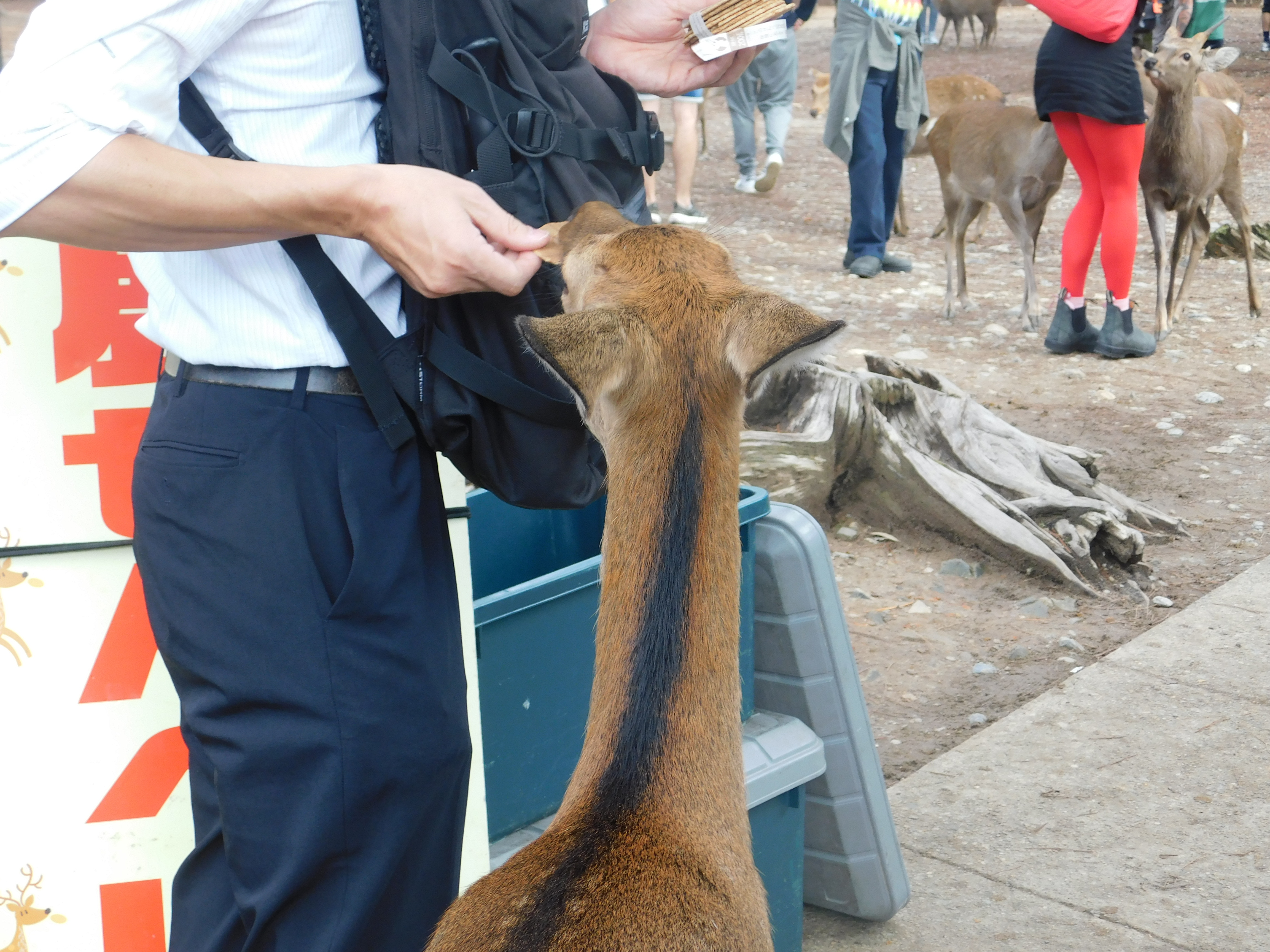
Deer at Nara Park, Japan
[Credit: Kaitlin White]
A trip to Japan is often a once-in-a-lifetime experience for many travellers. With so much of the country to see in such a short period of time, many people tend to leave only a small window for places outside of Tokyo, including Osaka. However, even with just 24 hours, Osaka offers enough to leave a lasting first impression.
The day starts bright and early with a journey to Nara, which is easily accessible by train from Osaka within 30-45 minutes depending on your starting station. Breakfast can be picked up along the way from one of the many bakeries scattered throughout the train stations, or from the range of origini and pastries offered at any convenience store. Some of my breakfasts while in Japan included the 7-ELEVEN egg sando, salt bread buns, and Vienna sausage rolls - all of which I'd recommend.
Nara Park (奈良公園) is known for its free-roaming deer, who famously bow for a treat. It’s best to visit earlier in the day to beat the crowds, although you should be warned that with fewer people around, the deer are more likely to follow you in search for a snack. The deer are fed special wafer-like biscuits which can be bought in a pack outside the park for ¥150 (approximately 70p). While the deer are typically docile, it must be remembered that they are still wild animals. During the mating season (September-November), male deer are likely to be slightly more aggressive. I did unfortunately leave the park with a few bruises, although I wouldn't let this put you off your visit.
Deer at Nara Park, Japan
[Credit: Kaitlin White]
While the deer tend to be the main attraction in Nara, it’s worth the brief walk to Tadai-ji Temple (東大寺) to visit the 15-meter-tall Bronze Buddha. Tickets can be bought online and are typically around ¥1,200 per person (approximately £5.60).
Shortly after noon, make your way to Osaka Castle (大坂城) – one of Japan’s most iconic landmarks. The castle was built on two raised platforms of landfill, and is surrounded by a moat. The grounds are open to the public for free, and tickets to access the museum and tower can be purchased online from around £5 per person. Also within the castle grounds is Hokoku Shrine (豊國神社), a Shinto shrine built in 1879. This area tends to be much quieter, and is the perfect place to pay your respects and rejuvenate before the rest of your day.
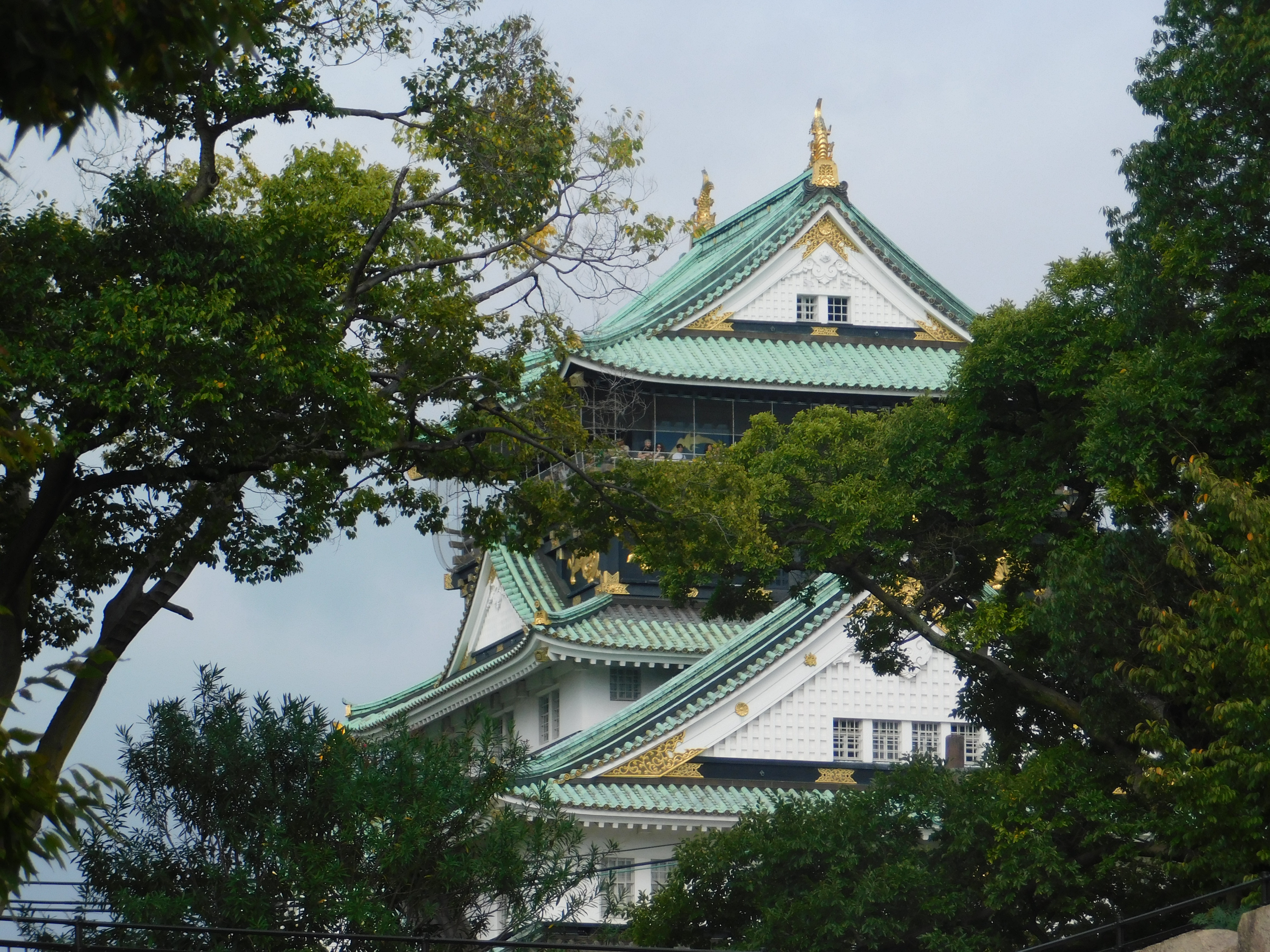
Osaka Castle
[Credit: Kaitlin White]
Next on the list is Namba Yasaka Shrine (難波八阪神社), which just may be my favourite spot in Osaka. The fastest way to get there from Osaka Castle would be taxi, which takes around 5-10 minutes. The shrine is tucked out of the way, but once you see it, you can’t miss it. Namba Yasaka Jinja is a 12-meter-tall lion-head stage for Shinto dance and rituals. The lion head is said to bring good fortune and ward off evil spirits by ‘swallowing’ bad luck. Because of this, I found it the perfect place to get myself a lion-head Omanori (amulets providing different forms of luck and protection) to ensure my safety as I went on with my travels.
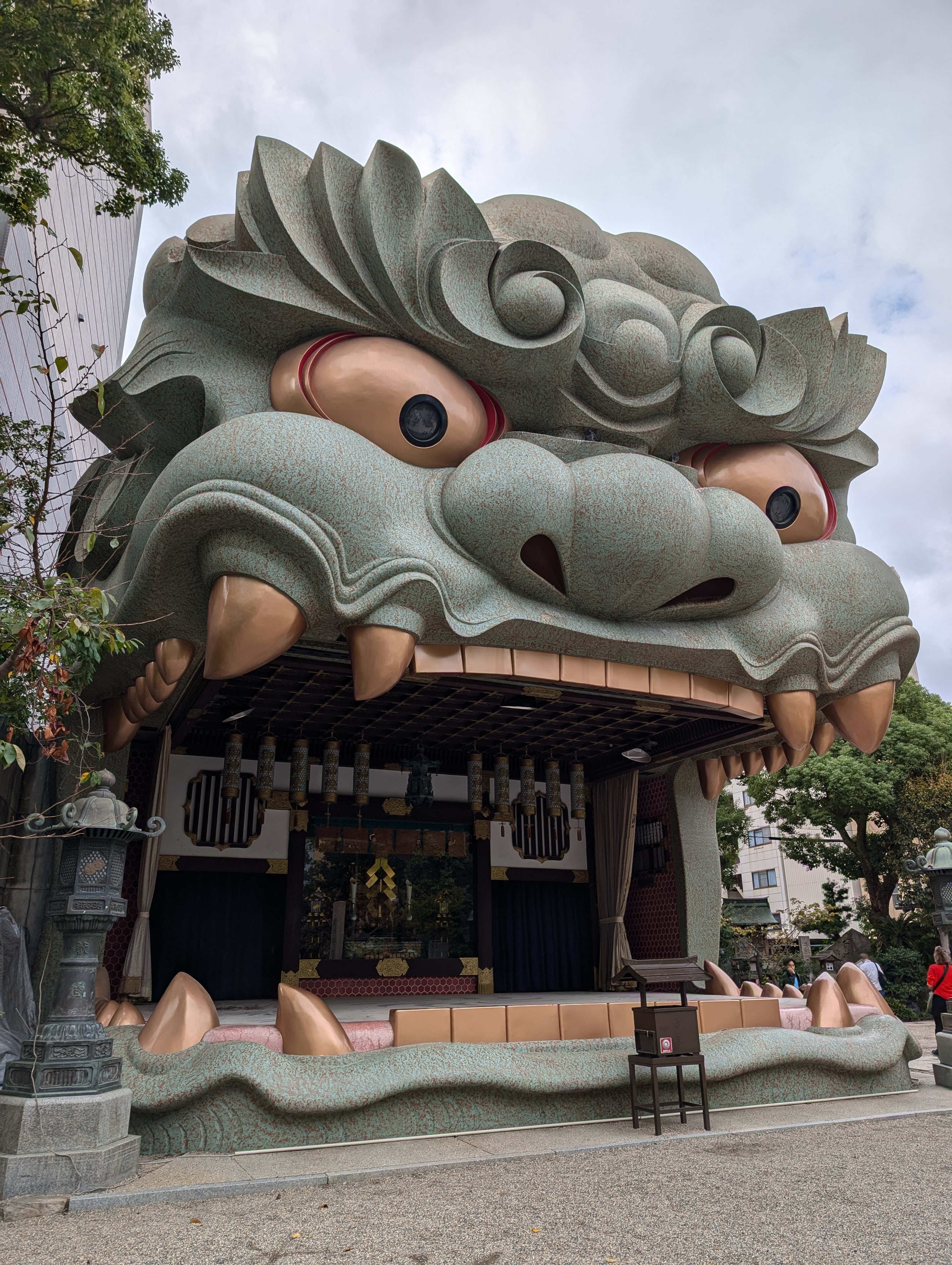
Namba Yasaka Shrine
[Credit: Kaitlin White]
Osaka Aquarium Kaiyukan (海遊館) is located in the port of Osaka, and is a must-see for marine life lovers. The aquarium has several habitats made up of 27 tanks in 16 main exhibits. As a certified shark-lover, this was an essential place for me to visit their two whale sharks – Kai and Yuu. The pair are located in the largest tank named the Pacific Ocean tank, which holds a variety of other creatures such as Pacific bluefin tuna, reef manta rays, and scalloped hammerhead sharks. For a little sweet treat, I would strongly recommend getting yourself the whale shark themed sea salt ice-cream from the dessert stall nearing the exit of the aquarium.
Just outside of the aquarium is Mermaid Square, where the Little Mermaid statue is located. The statue was presented to the city of Osaka by Carlsberg in Denmark, as a part of a cultural exchange between Osaka and Copenhagen. The area is quiet, and so made a nice spot to sit and eat your ice-cream.
As the evening comes to an end, it’s time for the final stop of the day – Dotonbori (道頓堀). The area runs along the Dotonbori canal, and it's known for its nightlife, food vendors, and illuminated signs. The main tourist attraction here is the Glico man display, which is often seen as an icon on Osaka. Ebisu bridge is the most popular spot for photos with the Glico man sign in the background.
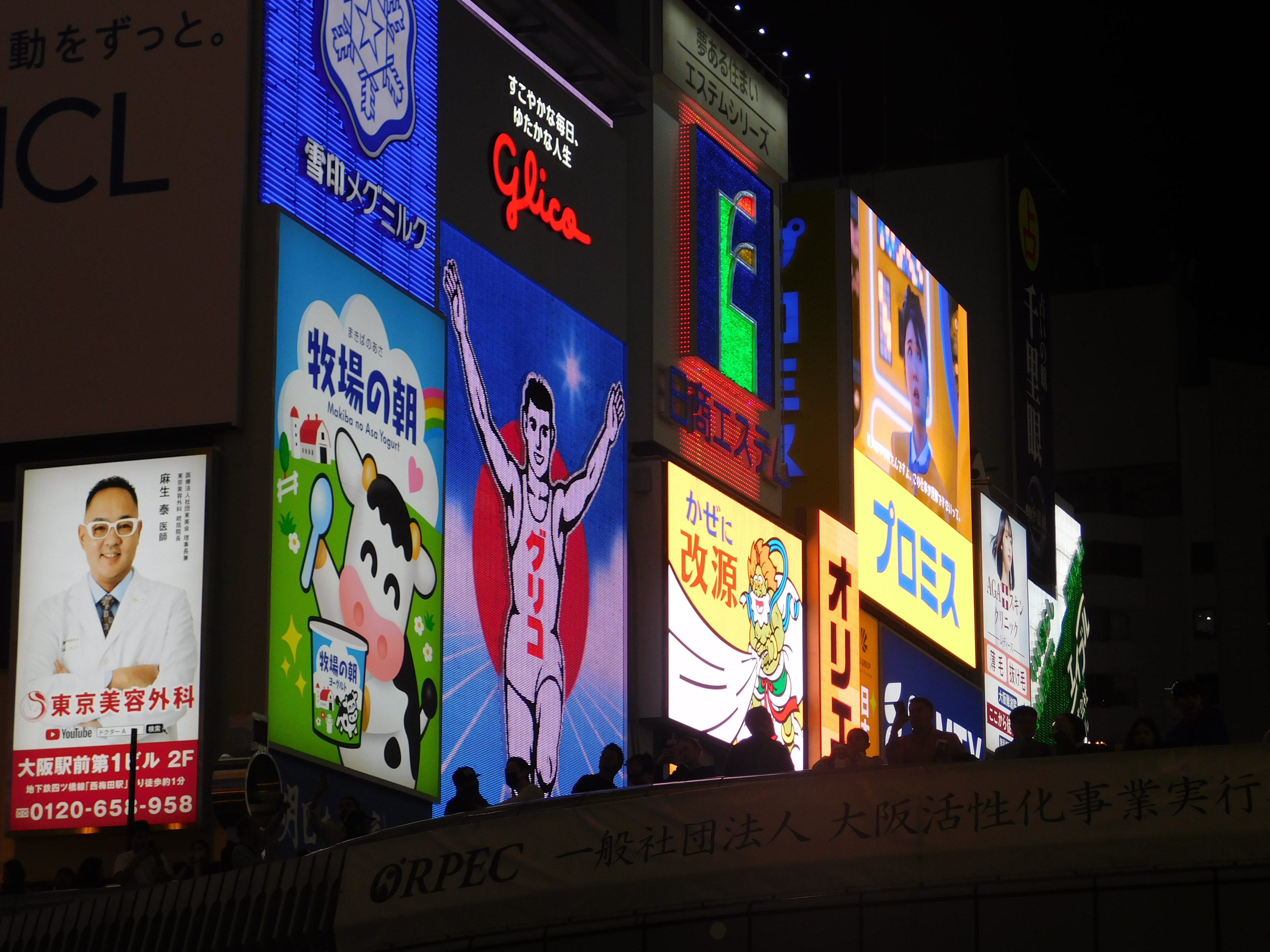
Dotonbori
[Credit: Kaitlin White]
It is here that you’ll find some of the most popular Japanese snacks, including the ¥10-shaped cheese coins (actually ¥500/£2.30), strawberry mochi, tonghulu (candied fruit on a skewer), Takoyaki (octopus balls), Cremia ice-cream, as well as Kobe or Wagyu beef cubes - all of which I'd recommend trying.
While this may seem like a lot for a single day, this was how I spent my sole day in Osaka, and couldn't imagine it any other way. From the bowing deer of Nara Park to the whale sharks in Osaka Aquarium, and from peaceful shrines to the bustling streets, Osaka leaves a lasting first impression - and gives you enough reason to start planning your next trip.
Liked this article? Read More Here

Offline Website Creator